
Heydrich's ghost
Inside the house of a Nazi killer

Reinhard Heydrich, head of Hitler’s Security Service, was one of the greatest monsters in the Nazi regime. In 1942 he lived in a large chateau just outside Prague, from where he administered the exploitation and political repression of the Czech lands. Thankfully, his rule was cut short in the summer of 1942 when he was assassinated by two members of the Czech special forces.
His chateau – a huge building with over 50 rooms – has long been an object of fascination amongst WWII historians and scholars. Unlike many other buildings related to Nazi crimes, it was not demolished in the aftermath of the war; but neither has it become a museum or a site of remembrance. At the moment it is privately owned, but unused. As a property, it is largely derelict.
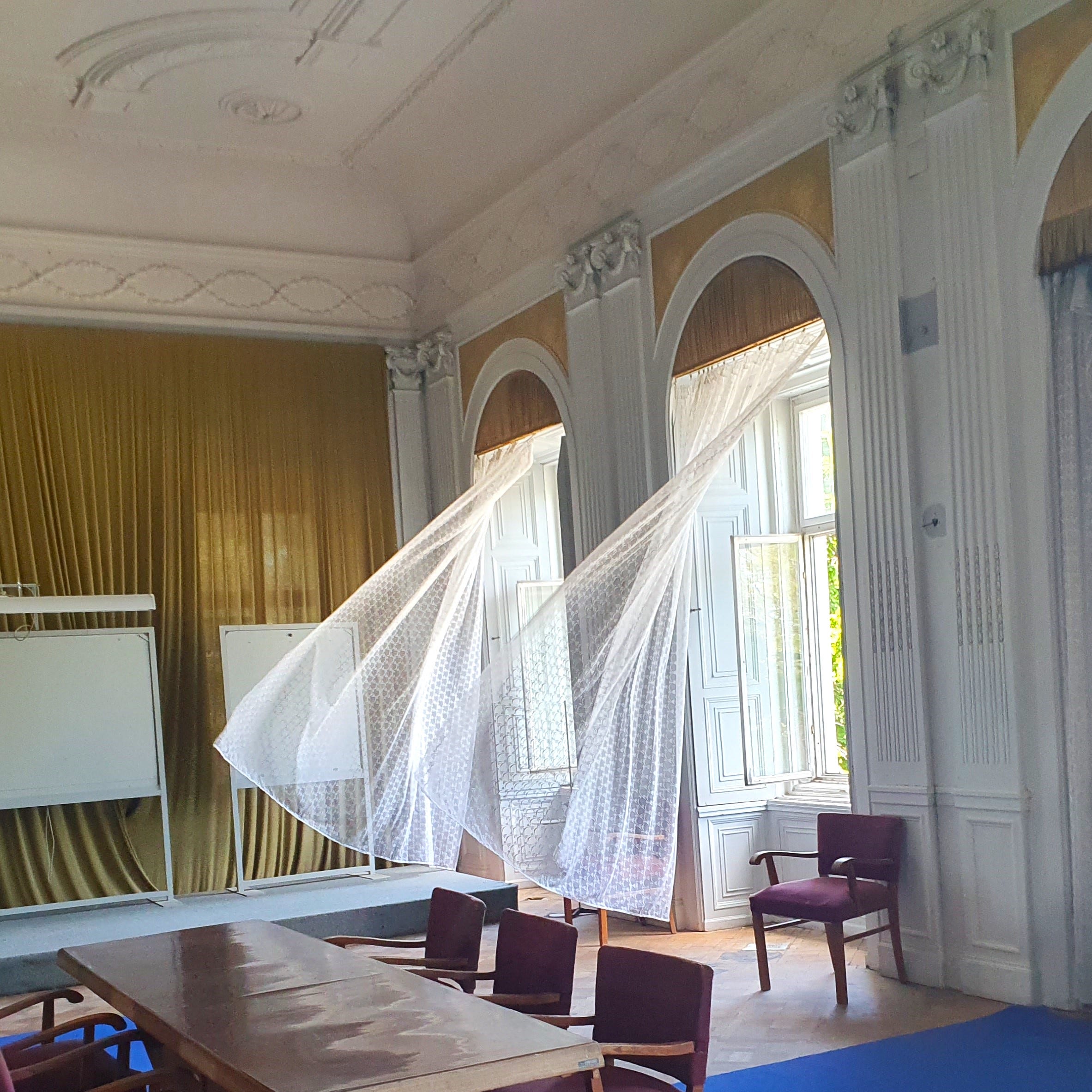
This year, thanks to the negotiating skills of the US National World War II Museum, I and a few dozen others managed to gain exclusive access to the building. In this article I will share my thoughts on Heydrich, his house and its disturbing history. I will also share some of the photographs I took that day, along with a video. These are images which, unless you were there with us, you will not be able to find elsewhere.
I feel I should explain a little about how and why this visit came about. In September 2024 I embarked on a trip across Germany and the Czech Republic with three good friends of mine – Sarah Kirksey, Darsey Williams and the historian Alex Richie. We had been sent here by the National World War II Museum to scout out locations to show to a group of American travellers earlier this year, on the occasion of the 80th anniversary of VE Day.
In the course of our scouting trip it quickly became clear that we needed to tell our guests the story of Reinhard Heydrich. This man was one of the darkest figures in both German history and Czech history. There are multiple sites around Berlin where his presence can still be felt – most notably at the Topography of Terror museum and at the villa at Wannsee where he signed off the protocol that led to the creation of the Nazi death camps. These were places we planned to show to our guests. But it was in the Czech Republic that this evil man evoked the strongest memories. It was here that he spent the final year of his life, and where he met his sticky end. The heart of that story – at least from the perpetrator’s point of view – was Heydrich’s chateau just outside Prague.
STORY OF A MONSTER
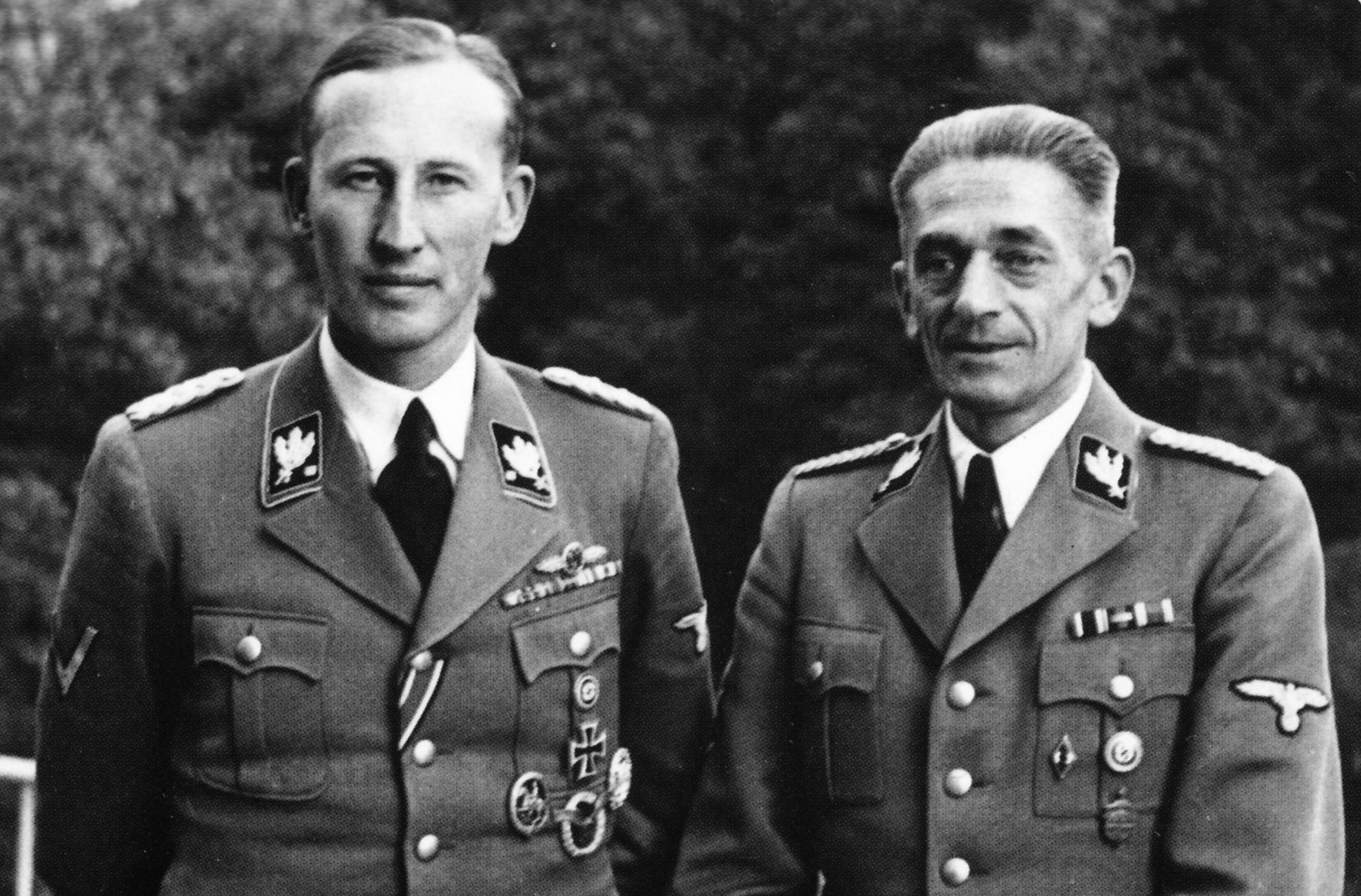
Reinhard Heydrich was the very picture of the Nazi ideal: tall, blond, athletic, physically brave, intellectually gifted and utterly ruthless. Hitler himself described him as “the man with the iron heart”. As Heinrich Himmler’s right-hand man, Heydrich became the founding head of the Sicherheitsdienst in 1932, head of the Gestapo in 1934 and head of the Reich Security Main Office in 1939.
In the first three years of the war he organised mass killings calmly, efficiently and without compunction. In Poland, over 60,000 intellectuals and community leaders were murdered by the Nazis in the first six months of the occupation - for no other reason than that they might one day pose a threat to Nazi rule. These Nazi killings were every bit as brutal as the more famous massacres by the Soviets at places like Katyn. It was Heydrich who organised it all.
In late 1940, the Nazis carried out similar actions in western Europe, and once again Heydrich was at the helm. Under the cover of the “Night and Fog” Decree, he masterminded the “disappearance” of thousands of suspected Resistance members in occupied France, Belgium and the Netherlands. Families were deliberately kept in the dark about the fate of their loved ones. The purpose was to spread uncertainty and terror amongst the general population.
But it was Heydrich’s actions against the Jews that made him most notorious. In 1938 helped to organise Kristallnacht. The following year he supervised the creation of the Einsatzgruppen, who followed in the wake of the German Army as they marched through eastern Europe, murdering hundreds of thousands of Jews by firing squad as they went. It was Heydrich who organised the Wannsee Conference in January 1942, at which the “Final Solution to the Jewish Question” was formally agreed. The creation of the Nazi extermination camps at Treblinka, Belzec and Sobibor were his most appalling legacy: when the mass killing operation in these camps began, it bore his name, “Operation Reinhard”.
HEYDRICH’S ARRIVAL IN PRAGUE
Towards the end of 1941, the Nazi leadership in Berlin started to become concerned about the situation in Bohemia and Moravia – those parts of Czechoslovakia that were now being governed directly by Germany as a “Protectorate”. Resistance to Nazi rule was on the rise, and it was felt that the Reichsprotektor, Konstantin von Neurath, was being far too lenient towards the Czech population. So, at the end of that year, Heydrich was asked to step in as von Neurath’s replacement. (Technically, Heydrich was von Neurath’s deputy – but since the Reichsprotektor had lost Hitler’s confidence, it was Heydrich who was really in charge.)
As soon as he arrived, he began treating the Czechs in the same way that he had already treated the Poles and the French. He immediately declared martial law, and began arresting and executing hundreds of people. His sentiments were quite clear: in comments to his aides he announced his intention to “Germanize the Czech vermin”.
During the day he worked from an office in the Prague Castle, but he actually lived in a chateau just outside Prague in the village of Panenské Břežany. His Secretary of State, a Sudeten German called Karl Hermann Frank, lived close by in an eighteenth century villa on top of the hill. The two men were well suited to work together. Frank, like Heydrich, was a vicious anti-Semite and seemingly addicted to brutality.
On the morning of 27 May 1942, Heydrich set out from his chateau on his daily commute into Prague. He rode in an open top car, driven by an SS driver named Johannes Klein. He had no escort – Heydrich was arrogant enough to believe that he did not need one – and he followed the same route that he always took on the way to Prague Castle. It was this complacency that allowed the attempt on his life to take place. British and Czech intelligence had by now worked out his daily routine, and knew exactly where best to ambush him.
This particular morning, as his car slowed down at a bend in the road beside some tram lines, a pair of Czech SOE agents were waiting for him. One of them, a man named Josef Gabčik, tried to fire a Sten gun at him, but it jammed. His partner, Jan Kubiš, then threw a specially prepared grenade at Heydrich’s car. Rather than speed away from the ambush, Heydrich ordered his driver to stop, drew his pistol and stood up in the car to confront his attackers. It was thanks to his arrogance that shrapnel from the exploding grenade tore into his body, mortally wounding him. He died several days later, in hospital, of sepsis.
REPRISALS
The reaction to Heydrich’s assassination was typically brutal. Hitler called for the murder of 10,000 Czechs as a collective punishment, and was only disuaded from this by the need to keep Czech workers producing for the German war effort. But Heydrich’s subordinate, Karl Hermann Frank, was determined to track down and punish anyone even remotely linked to the assassination. He arrested and tortured hundreds of civilians in an attempt to find someone who could reveal where the assassins were hiding.
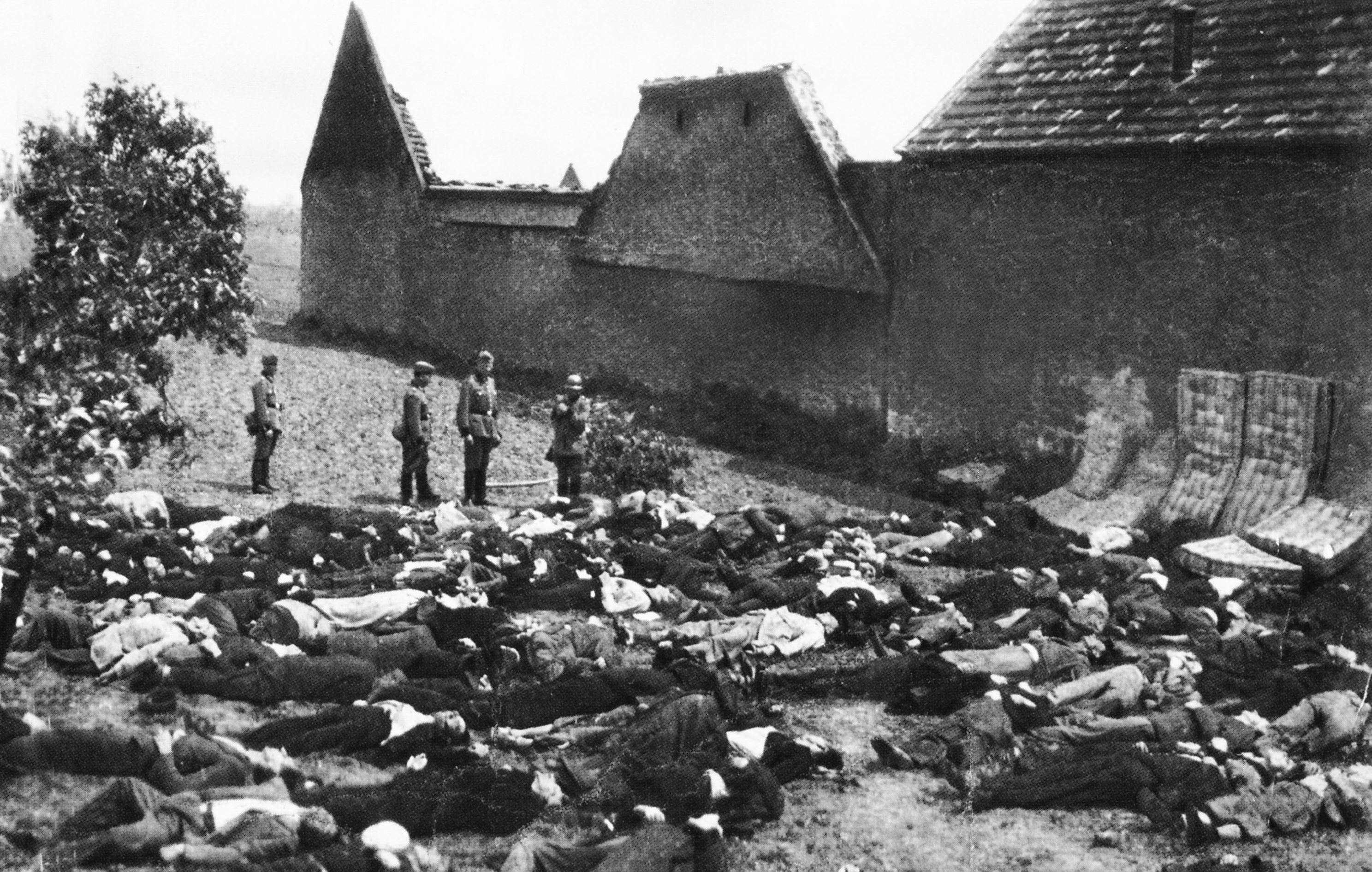
As an act of reprisal, Frank also ordered the massacre of an entire village. On 10 June, Nazi security forces surrounded the village of Lidice and executed all 173 men they found there. More than 300 women and children were then rounded up and sent to concentration camps where the vast majority also died. Finally, the village itself was burned down and levelled, as if it had never existed at all. Lidice was chosen because several known Czech army officers happened to come from here, and it was assumed that they must have had something to do with the assassination – but in actual fact, the people of Lidice were entirely innocent in this respect.
Two weeks later, a second village, Ležáky, suffered a similar fate. There was no attempt to hide these crimes – in fact, the Nazis openly publicised every stage of the massacres. This was designed to be a message to all potential resisters about the fate that awaited them and their communities if they ever attempted to defy the Nazis in future.
Unfortunately, Frank’s brutality paid off. Appalled by the massacre, one of the special forces team gave himself up voluntarily to the Gestapo and revealed the whereabouts of some of the other operatives in the Czech resistance network. After more arrests, and more torture, Heydrich’s assassins were finally tracked down, hiding in the crypt of a church. The church was surrounded, and a massive fire fight ensured – but eventually, to avoid capture, these brave Czech resistance fighters committed suicide.
STORY OF THE VILLA
After Heydrich’s assassination, his widow, Lina, continued to live in the chateau at Panenské Břežany. The house was formally gifted to her by Hitler himself, in recognition for the service her husband had given the Nazi state. The chateau was renamed “Jungfern-Breschan”, and was supposed to remain in the Heydrich family in perpetuity.
For the next three years Lina ran the house and its estate like a mini concentration camp. She was given a workforce of 150 or so slave labourers from the Theresienstadt ghetto and from Flossenbürg concentration camp. The grounds were cultivated, and the produce sold in order to pay for the upkeep of the house and the Nazi family who lived there. (Those who survived the war later testified that Lina Heydrich personally subjected many of the prisoners to physical abuse. It turned out that this woman had many of the same psychopathic tendencies as her dear dead husband.)
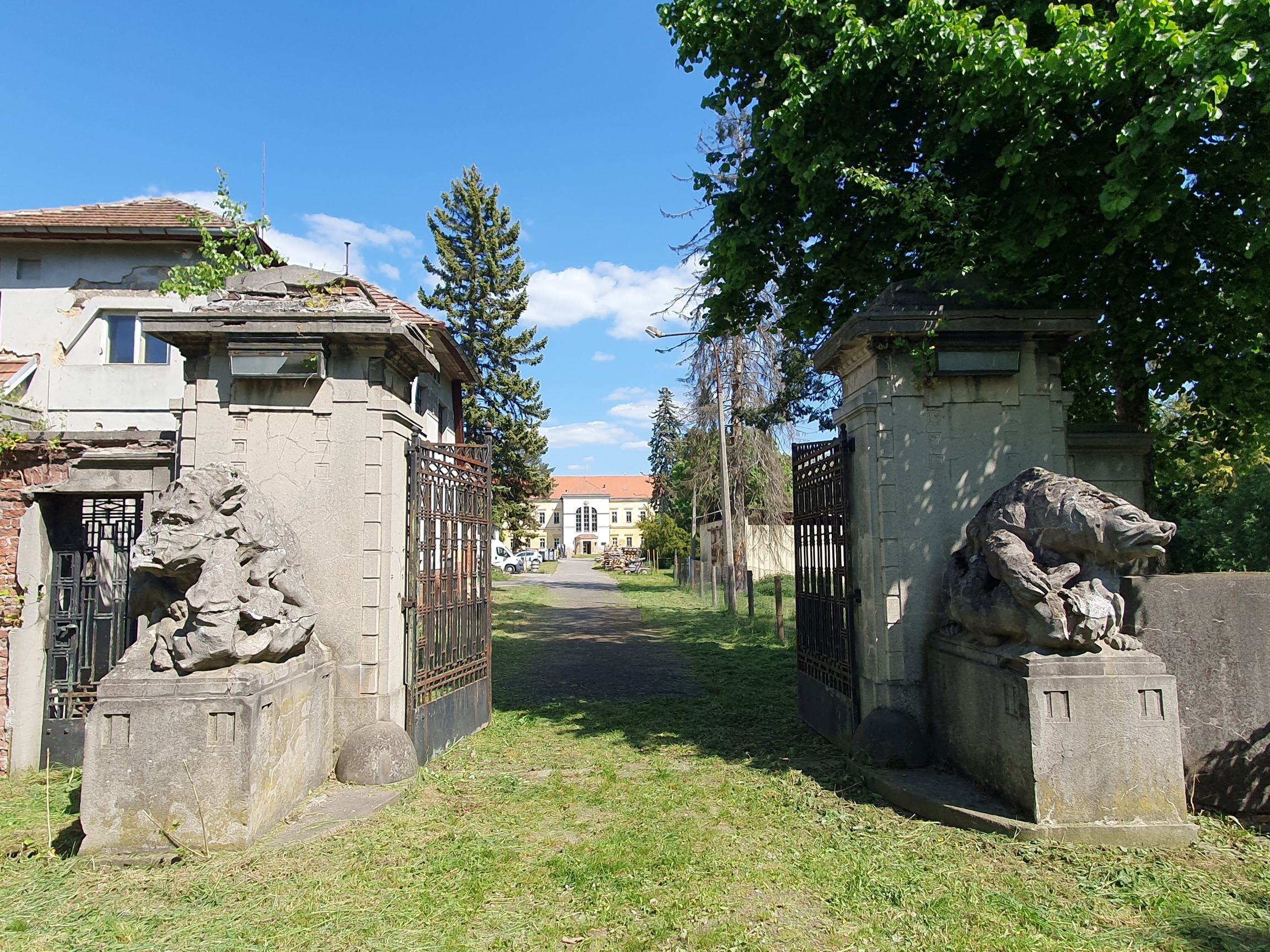
Tragedy befell the family in October 1943 when one of Lina and Reinhard’s four children was killed in a traffic accident outside the chateau. Ten year old Klaus was cycling around the estate with his younger brother when he noticed that the gate was open: he cycled out onto the main road and was immediately hit by a passing truck. In characteristic style, his distraught Nazi mother wanted the driver of the truck and all his passengers shot – but fortunately the police investigation found the driver not guilty, and he was freed.
At the end of the war, Lina and her family finally fled the chateau in order to escape the advancing Red Army. They returned to Germany where Lina lived out her years on a generous pension (as the wife of a police general “killed in action”), and ran a restaurant frequented by ex-Nazis. Despite being found guilty of complicity in war crimes by a Czech court, she was never extradited. She idolised her husband to the end of her days, and denied that he had ever done anything wrong. Indeed, she denied that the Holocaust had ever happened at all.
Meanwhile, her glamourous home and its lands were taken over by the Czech state. Over the next 50 years a series of workshops were built in its grounds, and it became a kind of minor industrial estate. The chateau itself was used by the Metal Research Institute, before eventually being abandoned. Its glory years as the residence of the country’s Nazi ruler were long gone.
HOW WE GAINED ACCCESS TO THE CHATEAU
On our scouting trip to the Czech Republic in September 2024, Alex, Sarah, Darsey and I made a tour of all the sites relating to Heydrich’s story that we could find. We visited the Prague Castle where Heydrich had offices, and the site of his assassination where there is a large memorial to the Czech resistance. We saw the crypt of the church where the Czech operatives died – the Church of Saints Cyril and Methodius – where there is a small exhibition devoted to their bravery. We also visited the memorial site at Lidice, the village that was annihilated in reprisal for Heydrich’s assassination. At Panenské Břežany we found Karl Hermann Frank’s villa, which is now a museum devoted to the crimes of the Nazi regime and their postwar punishment. (Frank was tried and hung for his part in the Lidice massacre.)
The only place that was missing was Heydrich’s chateau. You can see the building from Frank’s villa on top of the hill, but we were told that we could not go there, because it was now in private hands. The best we could do was to drive down to the gates of the chateau, and peer at it from a distance. This is what most tour guides do when they bring people to the village. Until then, no-one had ever been granted access.
As we were looking through the gates, we spied someone walking through the grounds. Alex, who is bolder than the rest of us, immediately called out to them and asked if we could come in. We were told to come to a side entrance through the small industrial estate, which we did, and before we knew it we were standing in front of the chateau’s huge, pillared doorway.
The person we had hailed met us there and explained that the whole site belonged to a local businessman who was trying to restore the property. And, to our delight, we were given his phone number. Over the next seven months Sarah and Darsey embarked on a series of conversations with the owner, who eventually agreed to grant us exclusive access.
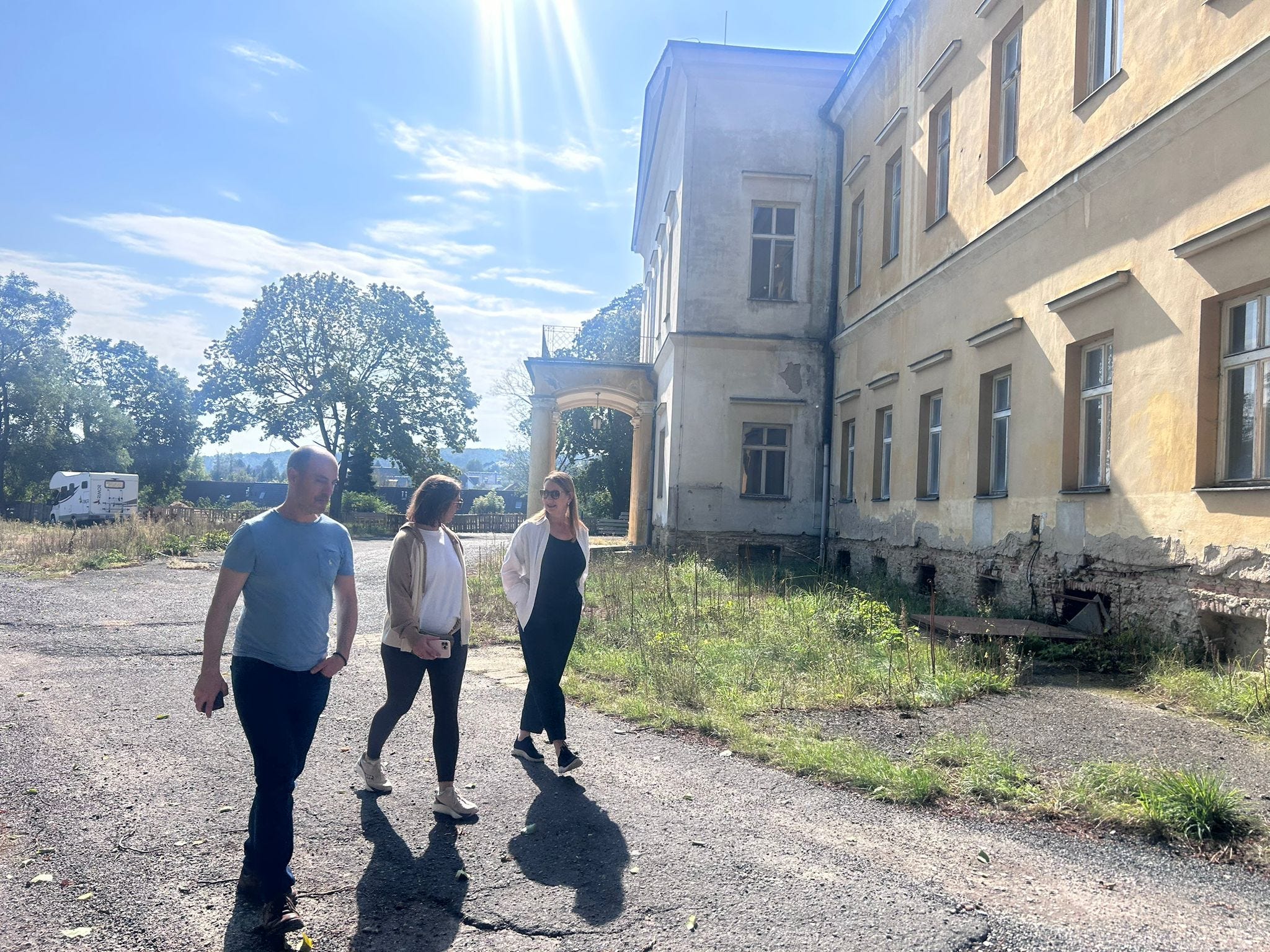
And so we come to May 2025. Shortly after the anniversary of VE Day in May 2025, a group of us gathered once again at Heydrich’s chateau – only this time we would be allowed to go inside. The photographs and video that follow this article were all taken on that day.
The owner himself met us there, and explained how he came to be involved with the building. He told us that he had never intended to buy the chateau: he had only wanted to buy a single workshop on the chateau’s grounds. He himself had spent years working in this place, and only wanted to ensure the future of his small business. But the workshop was not for sale as an individual lot. If he wanted to buy it, he was obliged to buy the entire site, chateau included. Perhaps a little naively, this he did.
He now finds himself saddled with an enormous responsibility. He wants to restore the building as a historical monument, and is using almost all of the income he gains from the workshops on the site in order to pay for it. So far he has made little progress – the chateau remains in a state of dilapidation – but he plans to begin work on it properly in the near future.
The building stands at a crucual time in its 180 year history. At the moment, several layers of its past are visible simultaneously. Stepping inside, you can see its nineteenth century fireplaces, the original staircase with its red marble walls, the beautiful mosaic floors in the hallway outsite the entrance to the ballroom where Heydirch and his family would once have held social gatherings. But you can also see the remains of the postwar technical institute that was housed here – the workshops, the functional offices, the huge boxes of electrical cabling. Many of the walls and ceilings are adorned with beautiful plasterwork; while others are covered in functional tiles and peeling paint. Walking around this place is a spooky experience. Heydrich’s ghost is not the only presence here. There are other ghosts too, left over from the Communist times.
