
Ten ways that WWII changed everything

“Countless innovations in science, medicine and social organisation grew out of this conflict. New philosophies and new moral movements were born of the tumult, even in regions far away from the fighting…”
THE SECOND WORLD WAR was one of the most catastrophic events in human history. As armed forces swept from one end of the globe to the other, even those who weren’t caught up in the violence could see that something fundamental was being destroyed. “This war has no relation with the last one,” observed the wartime journalist Edward R. Murrow, reporting from London in 1940. “You have to understand that a world is dying.”
His words proved prophetic. Over the next five years at least 60 million people were killed, and millions more died of starvation and disease. Thousands of towns and cities in Europe and Asia were razed to the ground, and communities that had remained unchanged for hundreds of years were wiped out. The devastation was unlike anything the world has ever seen.
Yet surprisingly, not all of the changes brought by the war were so negative. Countless innovations in science, medicine and social organisation grew out of the conflict. New philosophies and new moral movements were born of the tumult, even in regions far away from the fighting. In Latin America, for example, the beginnings of a democratic revolution took hold; and in Asia and Africa, colonial nations began to agitate for independence. In the years that followed, the whole world seemed to be inspired by wartime rhetoric about freedom and democracy.
Thus, while one world did indeed die during the Second World War, out of its ashes a new world was born. Here are some of the many aspects of life that were fundamentally transformed by the war:
1. The United Nations
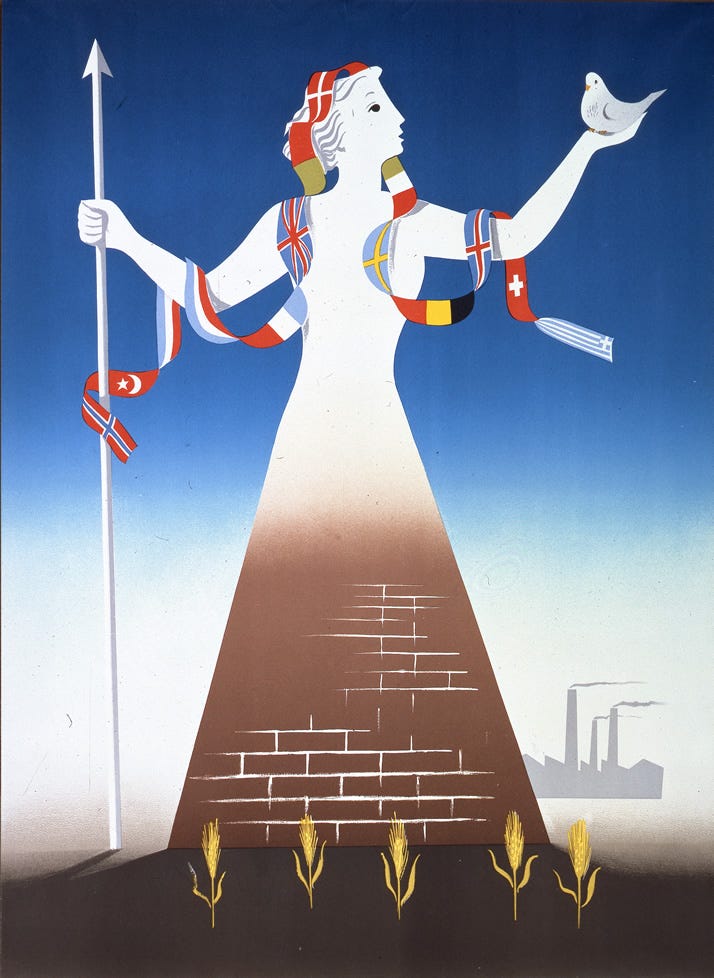
During the Second World War, men and women from more than 20 nations fought side by side, while more than 50 other countries contributed in some way to the Allied war effort. In many ways, the victory in 1945 was a triumph of international cooperation. The United Nations was established in the spring of the war’s final year specifically to build on this spirit of brotherhood. As President Harry S. Truman told the first ever UN conference, “if we do not want to die together in war, we must learn to live together in peace.”
There had been similar international organisations before, but this was the first one that ever enjoyed the support of all the world’s most powerful nations together, including the United States. It was the experience of the war, with all its horror and camaraderie, that created such political will.
For similar reasons, the post-war period also saw the birth of several other global and regional institutions, like the International Monetary Fund, the World Bank, and the first steps towards today’s European Union.
2. The Cold War
One of the great tragedies of the 20th Century is that before the rubble could be cleared from the Second World War, the stage was being set for a potentially deadlier conflict, one that would be waged by the two mightiest of the Allied powers.
On one side was the Soviet Union, whose leader, Josef Stalin, was determined to push his influence as far across the world as possible. By 1945, the Soviet Union possessed the largest continental army the world has ever seen, which completely dominated the Eurasian landmass.
Then there was the United States, whose military dwarfed that of every other western power. America had several advantages over the Soviet Union. In 1945, it had a monopoly on the atom bomb. It was also rich: by the end of the war America produced half of the world’s total GDP.
Had these two superpowers reached an agreement, it’s possible that much of the violence that plagued the world over the next four decades could have been avoided. But the ideological differences between Soviet-style communism and American capitalism were simply too great to overcome. The resulting Cold War spawned dozens of small but bloody proxy wars in all corners of the globe, while keeping the planet’s population on the cusp of nuclear Armageddon for two generations.
3. Antibiotics
Penicillin was discovered long before the Second World War, but for years it remained little more than a medical curiosity. This quickly changed once hostilities commenced. Understanding how important antibiotics could be in treating the sick and the wounded, British and American scientists pooled their knowledge -- with one another, with pharmaceutical companies, and ultimately with the U.S. government. Washington poured millions of dollars into research, and later financed the construction of entire penicillin manufacturing plants.
