
The Real James Bond
Ch 2: The psychology behind the man and his creator

James Bond has always been a conduit for male fantasies about heroism and sexual conquest. But he is also a very lonely figure. He is used and exploited by the government he serves, whose orders he follows without question despite the huge personal costs. He has no opinions about right or wrong, just blind loyalty to his country. He has no life beyond his missions, just occasional sexual release before going back to the job.
There are some deep moral questions about this, naturally… but for now I just want to look at some of the psychology that lies behind the character, and also behind the mind of his creator, Ian Fleming. Because Fleming, unlike Bond, was not a straightforward character at all.
Ian Fleming was born in 1908, the son of Valentine and Evelyn Fleming. He was the second of four sons, and always lived in thrall to his older brother, Peter. At school, Peter was the one who always shone: he won all the academic prizes at Eton, and became Captain of the Oppidans – a position a little like Head Boy. Ian simply could not compete, so he stopped even trying. Turning his back on academia, he concentrated instead on sports, winning back-to-back titles at the Eton school games. But despite this success, he continued to live in his brother’s shadow.
It would be tempting to think that Ian might have resented his older brother a little for this – but actually he idolized him. He also idolized his father, who had died a hero’s death in the trenches during the First World War. Consciously or otherwise, a great deal of this tragic hero worship and sibling rivalry also makes it into the James Bond novels and films. Bond, like Fleming, becomes an orphan when his mother and father are killed in a mountaineering accident. In the latest set of films, Bond’s arch-enemy Ernst Stavro Blofeld is revealed to be his adoptive brother. The hatred between them is actually a warped kind of brotherly love.
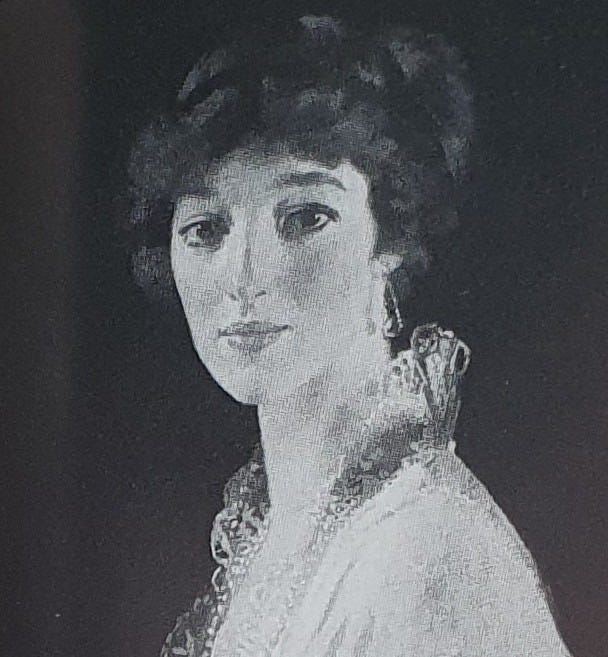
Just as interesting as Fleming’s relationship to the men in his family was his relationship to his mother. Despite packing him off to boarding school, Evelyn Fleming involved herself very actively in Ian’s upbringing. While she doted on Peter, who was always the golden boy of the family, she was always highly critical of Ian, who was very much the black sheep. She harried him at every turn, and seemed only to get more and more exasperated with him the older he got. Beautiful and attentive - but also domineering - she was known to her four sons not as ‘Mother’ but as ‘M’. You make the link.
Ian wilfully played up to his reputation as the black sheep of the family, and seemed determined to do badly at school. So his mother pulled him out of Eton at the age of 16 and sent him off to Sandhurst instead: if he wasn’t going to follow his brother to university, he should be sent to the army to see if he could make something of himself there. It was a disastrous idea. Despite being one of the top candidates after completing the entrance exams, he quickly fell down the rankings. He resented the mindless discipline, and was often in trouble. Ian was simply not the kind of boy who reacted well to being told what to do.
He first got into trouble with girls a few months later. It happened on the evening of the Sandhurst Sports Day. The story goes that he had taken a shine to the daughter of one of the colonels, and wanted to take her out. But she had already promised to go to a dance with another boy, so Ian threatened to get his revenge by finding himself a prostitute instead. She didn’t take him seriously, so on the night of the dance he went up to London to carry out his threat.
By the time he returned he had picked up a dose of gonorrhoea, and the whole military school was scandalized. To avoid controversy, his angry mother withdrew him from Sandhurst and sent him off to Austria to finish his education there, far away from the eyes of British society. (Again, inklings of this history appear in the Bond books, particularly in You Only Live Twice, where we learn that Bond was withdrawn from Eton as a boy because of some indiscretion with a chamber maid.)
Despite the shame of his leaving, this was probably the best thing that ever happened to Fleming. He was much happier in Austria than he ever was in Britain. Here he was at last out of the shadow of both his father’s ghost and his older brother’s phenomenal success. He could be physically active, and was constantly hiking or skiing in the mountains, but he could do it for the fun of it, without always feeling he had to compete. And he was free to chase girls without his mother breathing over his shoulder.
Under the tutorship of a kindly British couple – a former spy called Ernan Forbes Dennis, and his novelist wife, Phyllis Bottome – he stopped rebelling so much and started to express himself instead. He began writing creatively, and became quite good at it (though never as good as his brother, naturally, who became a well-known novelist and travel writer long before Ian ever did). For the first time he was among people who nurtured and encouraged him, and he would remain grateful to them for the rest of his life.
After a year or two in Austria, he moved to Geneva to learn French, where he fell head over heels in love with a Swiss girl named Monique Panchaud de Bottens. For a while it looked as if a cosy, successful life was waiting for him. He took the Foreign Office exams with an eye to becoming a diplomat. He got engaged to Monique, and brought her to London to meet his family. But then the whole dream came crashing down around his ears.
The first thing that happened was that he failed the Foreign Office exam. Then his mother stepped in to stop his marriage to Monique, and sent her packing back to Switzerland. According to his friend, Ralph Arnold, this was the point where he decided that there was simply no point in forming long-lasting relationship with women. “I’m going to be quite bloody-minded about women from now on,” he apparently said. “I’m just going to take what I want without any scruples at all.” If you are looking for a source for the terrible attitudes towards women in the Bond books, here it is.
Over the next few years Fleming drifted from one unsuccessful career to another. He worked as a journalist for a while, but then turned to banking in the hope of making his fortune. When it became obvious that he wasn’t much good as a banker, he turned instead to stock broking. But he wasn’t much good at that either.
It was the Second World War that saved him. I wrote in my last article about how he found a job in naval intelligence: he also found a sense of purpose, perhaps for the first time in his life. Like many others in Britain, the war was a defining time, which put all of his other problems and personal history into a bit of perspective.
This was also at time when he at last found an outlet for all of his wishes for power and prestige. For the first time, he was no longer in his brother’s shadow. He was a very important figure in the world of intelligence, and was given the leeway to come up with all kinds of plans and exploits of his own. All of the adolescent fantasies he might once have had about becoming a hero, fighting off villains, saving the world now – to a certain degree they now seemed to be coming true. The Bond books, written seven or eight years after the war, were almost certainly an attempt to recreate this same feeling.
But his problematic relationship with women continued. He pursued women relentlessly, and was only ever interested in one thing. Some of the women he slept with knew this and accepted it. But there were others who foolishly believed that they might somehow be able to change him, and got hurt in the process.
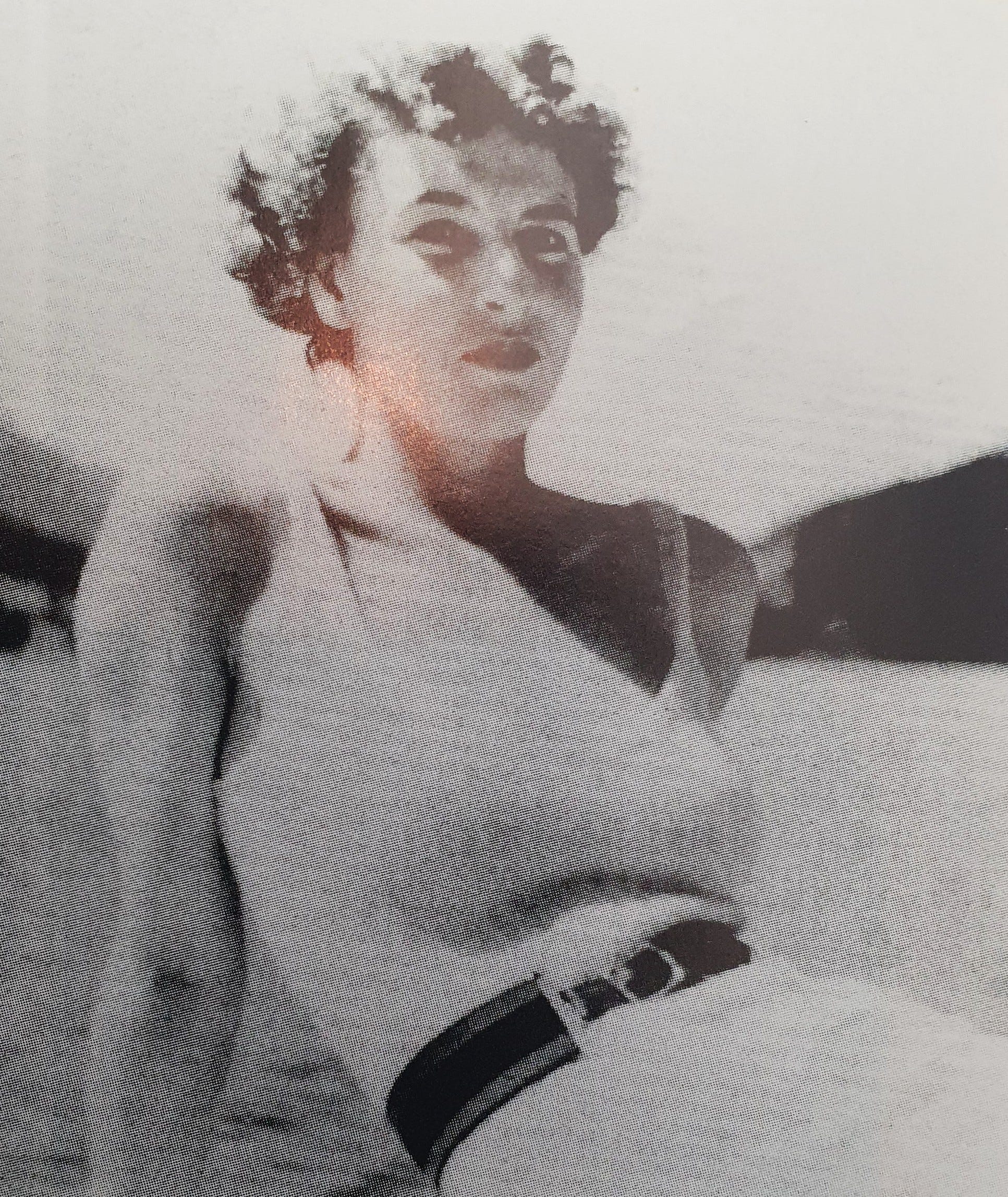
There was one particular woman, named Muriel Wright, who doted on him despite the awful way he always treated her. He was supposedly engaged to her, but in reality he was just stringing her along, and was relentlessly unfaithful to her: even his closest friends were appalled at how badly he treated her. He only truly appreciated her after it was too late. One night in March 1944 a bomb landed near her apartment in London, sending a large piece of masonry flying through the window. It struck her head, killing her instantly. Stricken by grief, Fleming at last began to feel ashamed of the way he had treated this poor, blameless woman. He began wearing her bracelet on his keyring, and refused to go to any of the places he used to frequent with her. But as some of his colleagues remarked at the time, it was all a bit too late. “The trouble with Ian,” remarked one, “is that you have to get yourself killed before he feels anything.”
Once again, we can see these attitudes reflected in the Bond books. James Bond only has a couple of serious relationships with women, but they are always short-lived. A classic Bond girl must be beautiful, witty and sexually available – but she almost always meets a tragic end. Tracy Bond, who marries the hero at the end of On Her Majesty’s Secret Service, doesn’t even make it past her wedding day before she is assassinated by one of Bond’s enemies.
It is unsurprising that many of Fleming’s own complex feelings and attitudes make it into the Bond novels: that is what most novelists do. It is also unsurprising that Fleming recycled the same feelings of adventure that he had experience during the war: in the 1950s, that is what all of Britain was doing – and I will explore this phenomenon a bit further in a later post. But there are other things beneath the surface here, including a difficult relationship with his mother, an inferiority complex with his brother and his father. One can read the James Bond novels as an exercise in adolescent wish fulfilment on behalf of its author, and one would not be far wrong.
But if so, Fleming was not alone. The incredible success of the Bond novels and films over the past 70 years shows that millions of others have the same fantasises and hang-ups, the same urge for heroism and sexual fulfilment. Psychologically speaking, it is not complicated at all…
POSTSCRIPT: I am not normally keen on psychoanalysing people I’ve never met: what does an amateur like me really know about Ian Fleming’s motivations? But Fleming was not above a bit of amateur psychoanalysis himself: his guardians in Austria were disciples of Alfred Adler - the man who coined the term “inferiority complex” - and Fleming himself translated Carl Jung’s lectures when he was a young man. His biographers and friends were also fond of psychoanalysing him - he was the sort of character who seemed to invite it. So this short essay is just a little episode in a long tradition. And anyway, why not?